Leak Detection Equipment: What Professionals Use
Type “leak detector” into any shopping site and you will find dozens of gadgets promising to find a hidden pipe leak for under fifty dollars. Some of them work fine for what they are built to do. None of them do what a professional crew does when we show up at a Pasadena home with a suspected slab leak or a mystery spike on the water bill. Here is a breakdown of the actual leak detection equipment behind a professional job, what each tool is good for, and where the store bought versions stop being useful.
Acoustic Listening Equipment
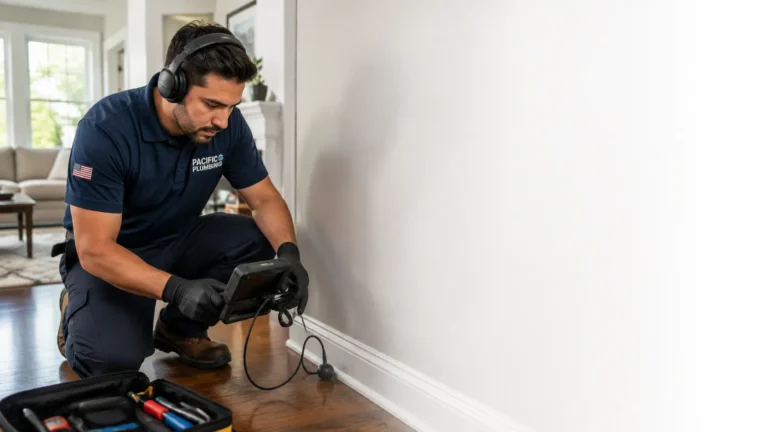
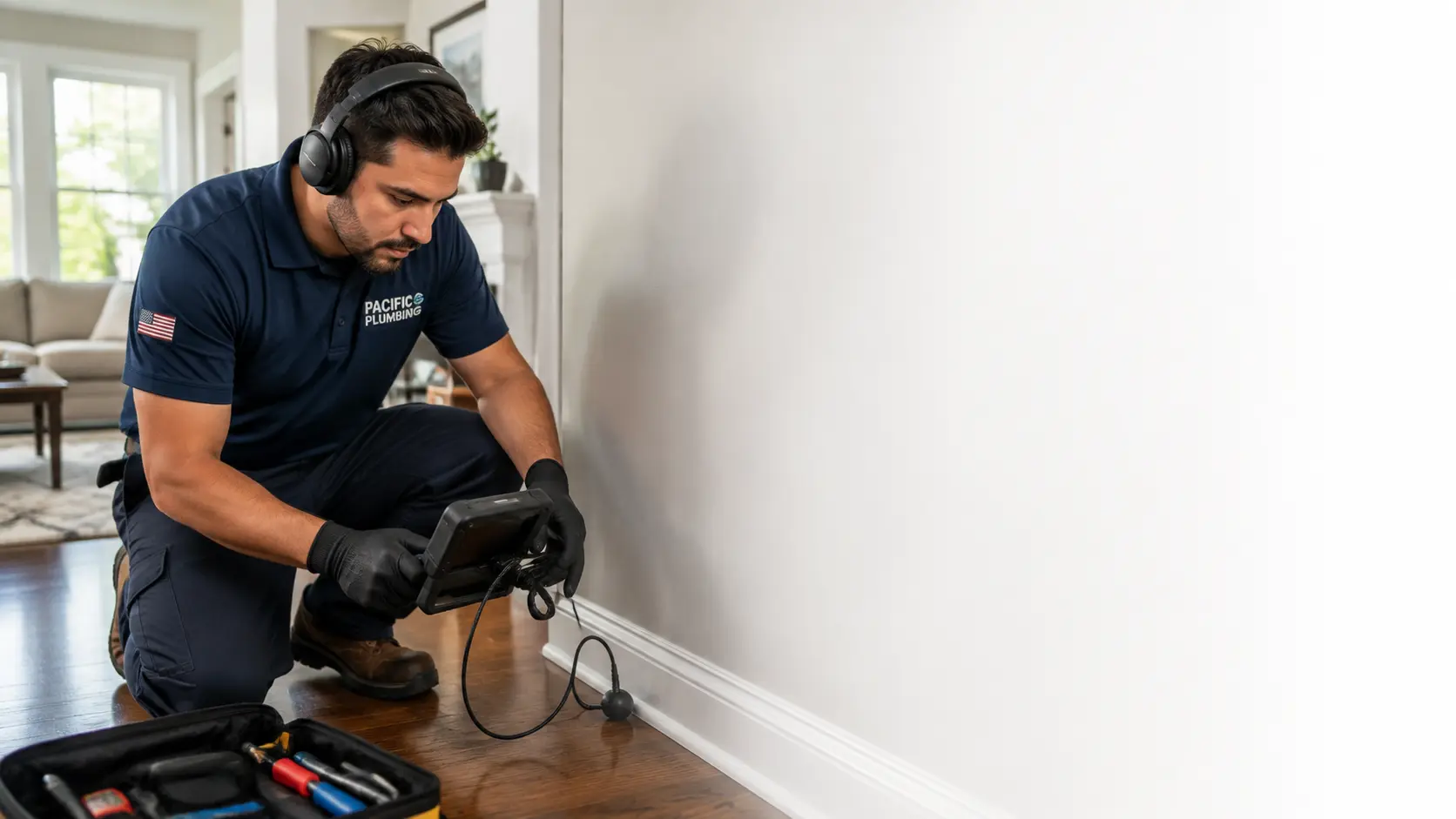
This is the workhorse of the trade. An acoustic listening device, sometimes called a ground microphone or a leak noise correlator, picks up the faint hissing or tapping sound water makes as it escapes a pressurized pipe. Two sensors are placed along the suspected line, and the equipment compares the timing of the sound reaching each one to calculate the exact point of the leak, often within six inches.
This is the same core technology used in electronic listening devices sold to homeowners, but the difference is sensitivity and filtering. Consumer versions pick up traffic noise, HVAC hum, and footsteps along with the leak. Professional grade correlators filter that out and can trace a pinhole leak through concrete, soil, or plaster where a cheaper device would just return static.
Infrared Thermal Imaging Cameras
A thermal imaging camera does not see the leak itself. It sees temperature differences. Hot water escaping under a slab or behind a wall creates a warm patch that shows up clearly against the surrounding cool surface, long before it is visible to the eye or noticeable underfoot.
This tool matters most in Pasadena’s older Craftsman homes and mid century tract houses in neighborhoods like Hastings Ranch, where copper supply lines run directly through the concrete foundation. A thermal scan can map the general area of a hot line leak before a single tool touches the floor. Cold water leaks are trickier since they do not always create the same thermal signature, which is why thermal imaging is almost always paired with acoustic detection rather than used alone.
Pressure Testing Equipment
Before any acoustic or thermal work begins, a plumbing zone often gets isolated and pressure tested. Air or water pressure is introduced into a section of pipe, and a gauge tracks whether that pressure holds steady or drops. A drop confirms there is a leak somewhere in that isolated section, narrowing the search area before the more precise equipment comes out.
This step is what separates a methodical detection process from guesswork. Skipping straight to acoustic equipment on an entire house wastes time. Pressure testing tells you which zone to focus on first.
Moisture Meters
A moisture meter measures the water content inside a material like drywall, wood framing, or subflooring without cutting into it. These are handheld and relatively inexpensive, which is why some homeowners already own one. They are useful for confirming that a wall or ceiling is actually wet and for mapping how far moisture has spread, but they cannot tell you where the water is coming from. A moisture meter answers “is this wet” and “how far has it traveled.” It does not answer “where is the leak.”
Video Pipe Inspection Cameras
For sewer lines, drain lines, and some supply lines, a small waterproof camera on a flexible cable can be fed directly into the pipe. This gives a direct visual of cracks, root intrusion, offset joints, or corrosion inside the line itself. It is less common for pressurized water leaks since most of those are found with acoustic and thermal methods first, but for older cast iron or clay pipe common in Old Town Pasadena’s pre 1920 buildings, a camera inspection is often the clearest way to see exactly what is failing and where.
Tracer Gas Detection
For particularly stubborn leaks, especially underground lines or slab leaks that acoustic equipment struggles to pinpoint through dense soil, a small amount of hydrogen based tracer gas can be introduced into the empty pipe. The gas escapes through the leak point and rises to the surface, where a sensitive gas detector picks it up directly above the leak. This method is not needed for most residential jobs, but it is a reliable backup when other methods come back inconclusive.
Why the DIY Route Usually Falls Short
None of this means a homeowner cannot start the process. Checking the water meter’s leak indicator dial with every fixture shut off is a genuinely useful first step, and it costs nothing. What runs into trouble is when homeowners try to substitute a single consumer gadget for the combination of tools a real leak investigation requires.
A cheap acoustic pen might pick up a loud leak close to the surface. It will almost certainly miss a pinhole leak six inches under a concrete slab, or a slow leak buried under a foot of soil in an Altadena backyard. Worse, without pressure testing to narrow the zone first, a homeowner using a single tool often ends up guessing at a general area rather than a confirmed point, which leads to unnecessary cutting or digging in the wrong spot.
The other piece consumer tools cannot replace is documentation. A written report with the confirmed location, photos, and probable cause is what insurance adjusters and programs like the Pasadena Water and Power leak assistance credit actually require. A homeowner with a moisture meter reading has a data point. A homeowner with a licensed detection report has proof.
What This Means for Your Pasadena Home
If you are dealing with a warm spot on the floor, a running sound behind a wall, or a bill that jumped without explanation, the fastest and least destructive path is combining the right tools in the right order: meter check, fixture inspection, pressure testing, then acoustic and thermal confirmation. That sequence is exactly what our six step process follows on every job, whether it is a slab leak in a 1960s Hastings Ranch home or a buried line under a San Rafael Hills yard.
If your situation involves a concrete foundation specifically, our slab leak detection service walks through the acoustic and thermal combination in more detail, including what the cost typically looks like for that type of job.
Frequently Asked Questions
Can I rent professional leak detection equipment myself?
Some equipment rental companies do carry acoustic listening devices, but the results depend heavily on training and experience interpreting what the equipment is telling you. A false positive on a rented device can lead to cutting open the wrong section of wall or slab.
Is thermal imaging accurate on its own?
Thermal imaging works best paired with acoustic detection. On its own it can flag a warm area, but confirming that area is actually the leak point, rather than heat traveling along a pipe from somewhere else, usually needs a second method to verify.
How long does a full equipment based inspection take?
Most standard visits run thirty minutes to two and a half hours depending on the complexity, with slab leaks and underground line searches on the longer end of that range.
Do you charge extra for using thermal imaging or tracer gas?
Detection pricing is quoted upfront based on the type of leak suspected, not by which individual tool ends up being used to confirm it.