Leak Detection in Pasadena CA: 5 Silent Signs of Hidden Water Leaks in Your Home
Plumbing issues rarely announce themselves with a sudden, dramatic flood. Most of the time, water leaks start small—a tiny pinhole in a copper pipe, a hairline crack under your concrete slab, or a loose fitting behind drywall.
When homeowners need professional leak detection in Pasadena CA, they often realize the problem has been building up quietly for weeks. In older Pasadena neighborhoods, where historic charm meets aging copper and galvanized piping, hidden leaks are particularly common. Because our Southern California climate stays dry for much of the year, subtle moisture accumulation can quietly cause mold growth, high utility bills, and severe foundation damage before you ever notice standing water.
If you want to protect your property and avoid thousands of dollars in emergency repairs, keeping an eye out for silent warning signs is essential.
Why Timely Water Leak Detection Matters in Southern California
Pasadena homes feature a unique mix of mid century architecture, historic bungalows, and modern builds. Each construction era carries specific plumbing vulnerabilities. Older homes often suffer from degraded pipe joints, while newer builds might face stress-induced slab cracks due to minor seismic shifts.
Ignoring minor leaks doesn’t just waste water; it destabilizes the soil structure under your foundation. When clean supply water or wastewater leaks continuously, it erodes supporting subsoil. Over months, this causes floor displacement, cracked tiles, and ruined subflooring. Investing in early leak detection in Pasadena CA safeguards both your physical property and your long-term real estate equity.
1. Unexplained Spikes in Your Water Bill
Have your water habits stayed the same, but your monthly Pasadena utility bill keeps creeping upward? A sudden or gradual increase in water costs without an obvious reason is usually the first red flag of a hidden plumbing line leak.
Even a minor leak dropping just a few times a minute can waste hundreds of gallons of water every month. If you notice an unusual spike on your statement, perform a quick meter check:
- Turn off all faucets, washing machines, garden hoses, and irrigation valves.
- Locate your main water meter box near the curb.
- Note the current reading or watch the small low flow indicator triangle.
- Avoid using any water for two hours, then check the meter again.
If the numbers shifted or the leak indicator continues to spin, water is actively escaping somewhere on your property. Visiting our Homepage is the fastest way to get an emergency diagnostic scheduled before the next billing cycle.
2. Low Water Pressure Across Multiple Fixtures
When a main supply pipe or branch line develops a crack, water bleeds out into surrounding cavities instead of flowing directly to your faucets. This pressure loss causes weak shower streams, slow filling toilets, and underperforming appliances.
While a single clogged faucet aerator points to localized mineral buildup, a sudden drop in water pressure across your entire home signals a serious issue. Main line breaks under your lawn or inside crawl spaces require immediate attention to prevent structural erosion.
3. Warm Spots on Floors and Buckled Hardwood
If you walk barefoot across your tile, laminate, or hardwood floor and feel an unexpectedly warm patch, pay close attention. Hot water line leaks running underneath concrete foundations commonly called slab leaks radiate thermal energy directly upward through subflooring.
Over time, this trapped subterranean heat and moisture causes noticeable cosmetic and structural issues:
- Warped, cupped, or buckled hardwood planks
- Discolored carpet patches that feel damp to the touch
- Cracks running through tile grout lines
- A warm, humid draft near baseboards
Slab leaks require specialized, non invasive acoustic sensors to isolate without tearing up your entire concrete pad. You can learn more about how advanced equipment locates underground breaks on our dedicated Services Page.
4. Persistent Musty Odors and Mold Growth
Water trapped behind drywall, under kitchen cabinets, or beneath subflooring creates an ideal environment for mold and mildew colonies. If you notice a damp, earthy, or musty smell in specific rooms even after thorough cleaning moisture is accumulating out of sight.
In Pasadena’s warm summer climate, trapped water combined with high indoor temperatures allows toxic black mold to spread within 24 to 48 hours. If you observe peeling paint, bubbled wallpaper, or dark spots running along baseboards, professional intervention is necessary to prevent indoor air contamination.
5. The Sound of Running Water When Faucets Are Off
Quiet moments late at night offer a great opportunity to listen to your home’s plumbing framework. If you hear continuous hissing, dripping, or rushing water when no appliances, irrigation systems, or toilets are running, water is escaping somewhere inside your system.
A subterranean pipe break under your yard or an internal leak inside a wall cavity creates a distinct low hum that travels through your pipes. Never ignore subtle water sounds; they indicate pressurized water escaping constantly.
HModern Methods Used for Leak Detection in Pasadena CA
Gone are the days when plumbers had to tear down intact drywall or jackhammer slab foundations just to locate a suspected leak. Modern techniques focus on precision and non-invasive diagnostics:
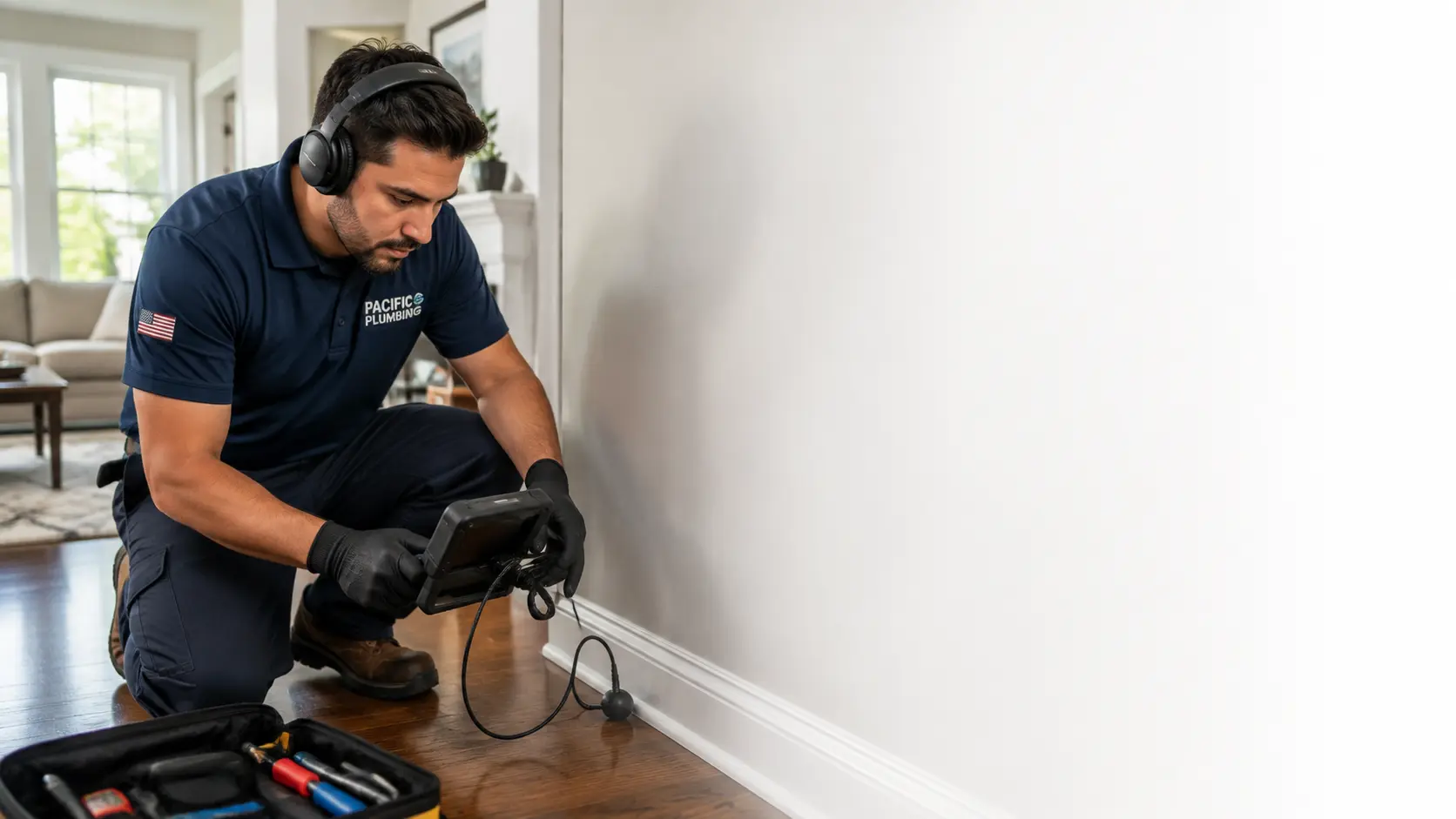
- Acoustic Ground Microphones: Highly sensitive listening equipment that picks up the specific sound frequencies of pressurized water escaping underground or behind plaster.
- Thermal Imaging Cameras: Infrared technology that maps temperature differentials beneath floors and behind drywall, tracking hidden moisture plumes without damaging surfaces.
- Pressure Isolation Testing: Systematically pressurizing independent plumbing loops to determine whether an issue sits in the main supply, hot water recirculating line, or outdoor irrigation system.
These advanced methods save homeowners thousands of dollars in unnecessary property demolition and repair costs.
Frequently Asked Questions
How much does professional leak detection in Pasadena CA cost?
Diagnostic costs vary based on property size and whether the leak is above ground or under a concrete slab. However, professional detection is far cheaper than repairing secondary structural decay, rotted subfloors, and mold contamination.
Can a hidden leak ruin my home’s foundation?
Yes. Continuous water leaks beneath concrete slabs wash away supporting soil, creating void spaces beneath your home. Over time, this leads to foundation settling, cracked load-bearing walls, and severe structural damage.
Will homeowners insurance cover leak detection services?
Most standard insurance policies cover the cost of tear out and water damage mitigation caused by sudden, accidental pipe bursts. Coverage varies by provider, so documenting the issue promptly with professional diagnostic reports is recommended.
How quickly should I address a suspected pipe leak?
You should schedule an inspection immediately. Even small pinhole leaks in copper supply lines can discharge over 100 gallons of water per day, escalating restoration expenses rapidly.